Count Up, Not Down
Almost every number you have ever been given about food is one you are meant to push down. Calories down. Sugar down. Carbs down. Fat down. Portions down. And each one of them happened depending on which decade you were paying attention. Even the best advice arrived as a subtraction: less of this, none of that, one fewer of the other.
But interestingly, nobody told us that there is one food number worth watching that goes the other way. So the most people have never counted it once.
Why cutting things out stalls
Removal works, for a while. And rightly so. You take out the obvious thing, you feel better, and then the improvement flattens. That is not a failure of willpower. It is arithmetic. Subtraction has a floor: once the obvious thing is gone, there is nothing left to take away. Infact further subtraction or complete elimination may have the opposite effects. Most people reach that floor within a few weeks and conclude, wrongly, that food is simply not their problem.
Subtraction also tells you nothing about what is missing. A week of eating can be clean, moderate and entirely sensible, and still be narrow. You can cut everything you were told to cut and eat the same eight ingredients every single day, and not one piece of the advice you were given would notice.
The number that goes up
Ask the people who study what food actually does inside the body, what they pay attention to, and it is rarely a single nutrient. It is range of nutrients providing a variety of vitamins and minerals. How many genuinely different plants you eat in a week: vegetables, fruit, beans and lentils, whole grains, nuts, seeds, herbs and spices. Different species, not different meals.
Range is its own input. The parts of your food that feed the rest of the system, the fibres and the compounds bound up with them, are not interchangeable between plants. Each one brings a slightly different set. Eating twice as much of the same vegetable does not stand in for eating a different one.
It is also the rare piece of food advice that asks you to add something rather than give something up. Because adding fulfills our daily requirements of vitamins and minerals. Hence counting up is what matters too.
One thing worth doing this week
You do not need to change anything about how you eat. Just count. Its all about assessment for one week of intake.
Keep a note on your phone or a diary or on an Excel sheet. Every time you eat a distinct plant, add it to the list. One line per species, not per serving: oats go down once, whether you eat them on four mornings. The beans in a soup count. The basil on top counts. Coffee and tea do not unless its a milk or similar one, and neither does anything that arrived as a powder or a tablet.
At the end of seven days, look at how long the list is.
That number is all this week asks of you, and it is worth more than it sounds, because most people are surprised by it in one direction or the other. A short list explains a great deal about a pillar that has felt vaguely unsatisfying for years. A long list tells you your effort belongs somewhere else, which is just as useful, because it means you can stop worrying about this one.
If you want the number to move
The cheapest way to raise it is not a new way of cooking. It is more variety inside the things you already make. A bowl of mixed vegetables instead of a single one. A plate of beans and lentils you have never bought. A second kind of nut in with the first. A jar of dried herbs you own and never open.
None of that changes what you cook. It only changes how many species end up in it, and it moves the number faster than any new recipe would.
What this is not
It is not about weight, and it is not a rule you have to keep. There is no target here, and nothing to fail. It is a count, and the whole point of it is that you have never seen it before. Something you have never measured is something you cannot have been working on, whatever else you have been doing right.
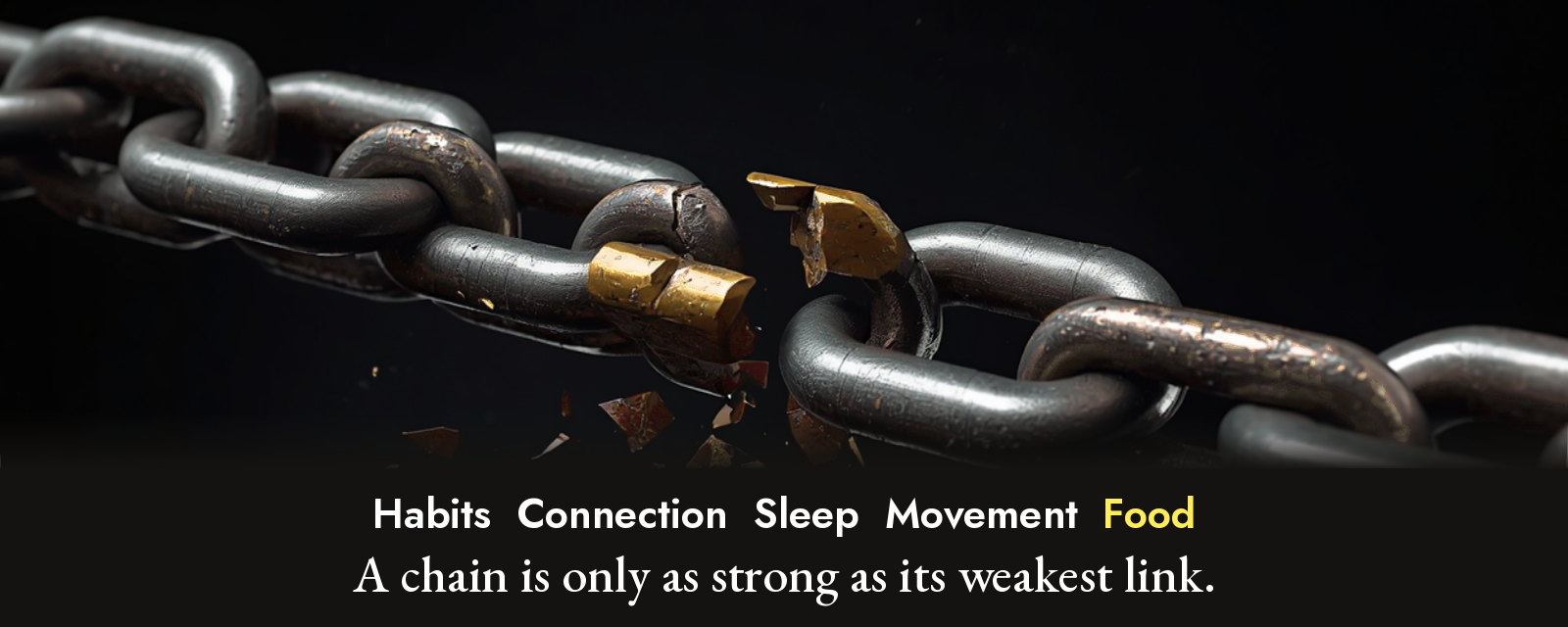
That is the thread running through all of these letters. Four pillars can be in good order while the fifth quietly sets the ceiling, and the one setting it is almost always the one nobody is looking at.
The book, briefly
Fix the Floor gives this pillar two chapters, The Balanced-Diet Deception and Engineering Your Plate. It is out now. That is the whole of the mention, and next week we are back to one useful thing.
Thank you for reading. See you next Wednesday.
Aamir