I spent almost three decades measuring what people cannot feel
EEG, brain scans, the earliest signatures of stress and depression — the things a person cannot sense in themselves until much later. That work taught me one thing worth passing on: the part of your health that is limiting you is rarely the part you are watching.
Aamir Malik, PhD · Professor of Neuroengineering, Brno University of Technology, Czech Republic

The five things
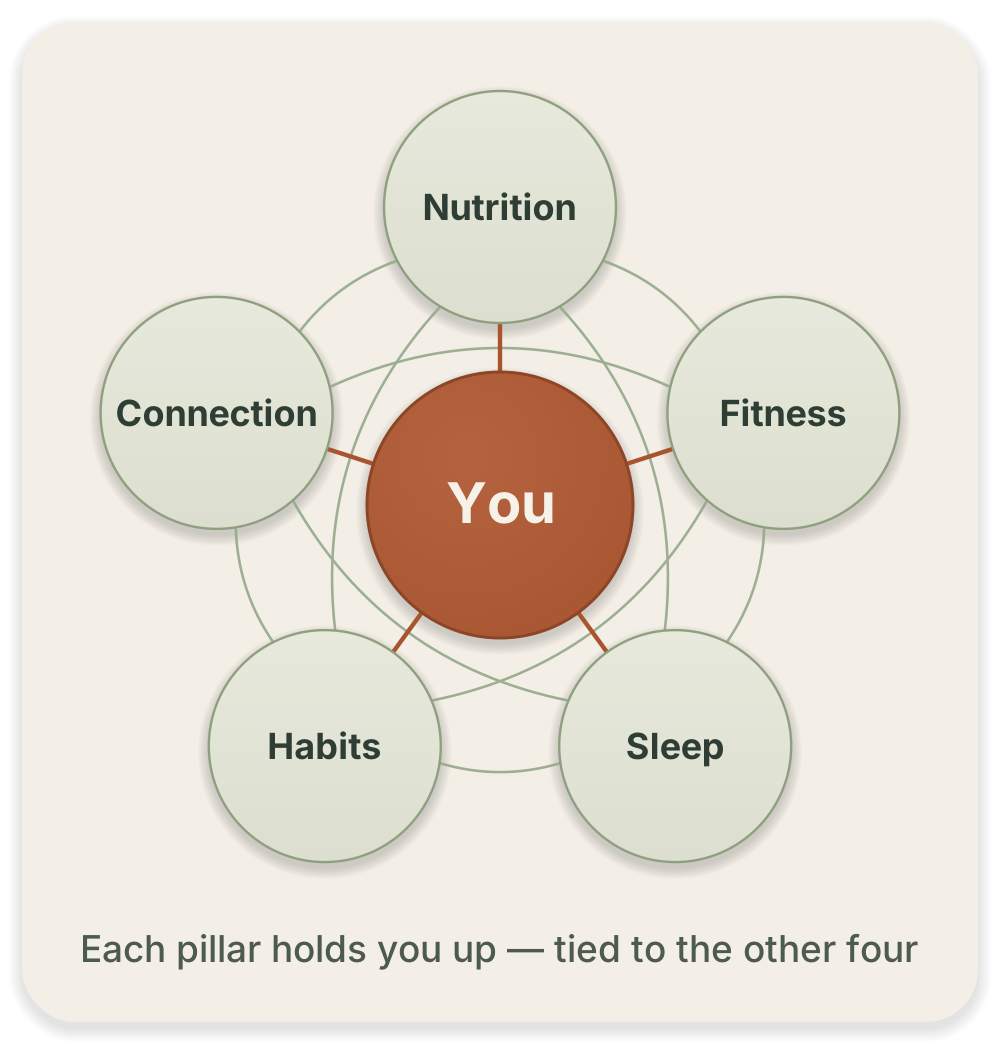
Most of what makes us unwell is built at home, in the ordinary shape of a day — what you eat, how you move, how you sleep, the small habits you barely notice, and the people you are connected to.
Health stands on those five, and it gives way at the weakest one. Which is why strengthening what is already strong changes so little, and why fixing each complaint on its own so often leaves you no better.
Almost nobody looks at all five at once. That is the work.
Three things I do
Professor
I head the Cognitive and Neural Engineering group at Brno University of Technology in the Czech Republic, working on the early detection of stress, anxiety and depression.
The researchAuthor
Six books. Five written for researchers, and one for anyone who wants to know how their own life is affecting their health.
The booksCoach
I work one to one with people who have already tried the obvious fixes, are doing most things right, and still do not feel well.
The coaching
If you want to know which part is holding the rest back, that is what I do.
Two one-hour sessions a week apart, a written assessment, and one thing to change first.
See how coaching worksThe book
And I wrote the whole method down
Everything I use in a coaching session is in it. You do not need me to use it.
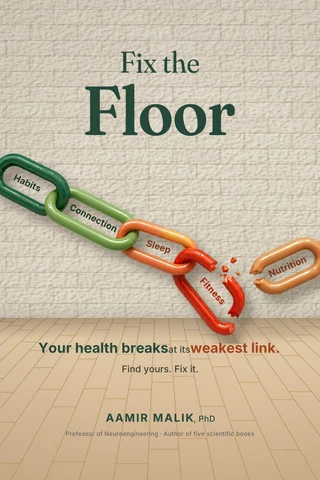
Five of my books were written for researchers. Fix the Floor is the first one written for the people the research is actually about — the five pillars, how to measure each of them honestly at your own kitchen table, and what to do with the answer.